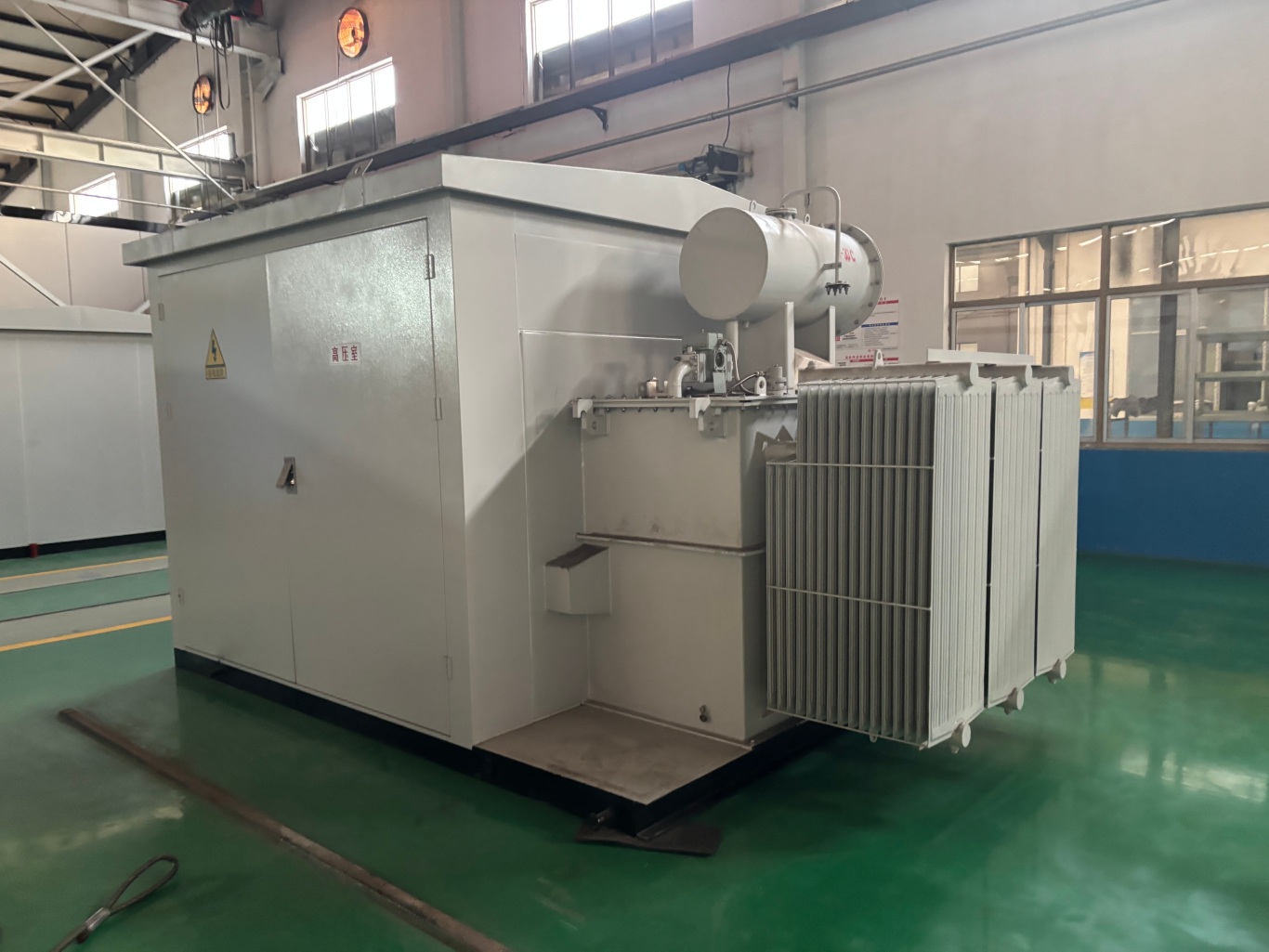

When selecting a kiosk substation, one should not focus solely on appearance and price; fundamentally, the overall configuration must be determined by integrating actual power demand, the on-site installation environment, and compatibility with the power grid system.
1. Determine Capacity
First, calculate the project’s total load power, then determine the required transformer capacity. The general rule for selection is: transformer capacity ≥ actual maximum load × 1.2–1.3. This ensures a reasonable safety margin—avoiding waste caused by oversizing, while preventing long-term overload operation resulting from undersizing.
2. Confirm Voltage Levels
Select the appropriate voltage levels based on local power grid connection requirements. The medium-voltage side typically utilizes 10kV, 20kV, or 35kV, while the low-voltage side is predominantly 400V/380V. These parameters must align exactly with those of the power supply system; otherwise, the substation cannot be successfully integrated into the grid or operate normally.
3. Select a Power Supply Scheme
The configuration of the medium-voltage side directly dictates the power supply method and reliability. For standard terminal supply applications, a simple single-source incoming line configuration suffices; however, for scenarios demanding high continuity of power supply, a ring main unit solution is recommended.
4. Select the Transformer Type
Oil-immersed transformers offer superior heat dissipation, cover a wide range of capacities, and are more cost-effective, making them suitable for outdoor and general industrial settings. Dry-type transformers, conversely, boast superior fire safety performance and are typically deployed in indoor environments or locations with strict fire protection requirements. While most kiosk-type substations are configured with oil-immersed transformers, the final choice should ultimately be determined by your specific operating environment.
5. Low-Voltage Power Distribution Configuration
The low-voltage section requires system design tailored to the specific characteristics of the load, including the number of outgoing circuits and whether to incorporate reactive power compensation devices. The configuration of the low-voltage side directly determines the method of power distribution and significantly impacts operational performance.
6. Installation Environment and Structural Selection
Different environments impose distinct requirements regarding the structure and performance of the enclosure. Urban and commercial areas prioritize aesthetic harmony and low noise levels, whereas industrial zones emphasize structural durability and heat dissipation efficiency. Regions characterized by high temperatures, high humidity, or heavy dust accumulation require a correspondingly higher equipment protection rating.
7. Protection and Automation Requirements
Appropriate functions should be configured based on the criticality of the project. Standard projects typically require basic overload and short-circuit protection, while critical projects necessitate the addition of advanced features such as relay protection and remote monitoring capabilities.
8. Transport and Installation Conditions
During the selection process, it is also essential to consider overall transport dimensions, lifting weight constraints, and the ease of on-site wiring; these factors are of particular importance for export projects or engineering works located in remote regions.