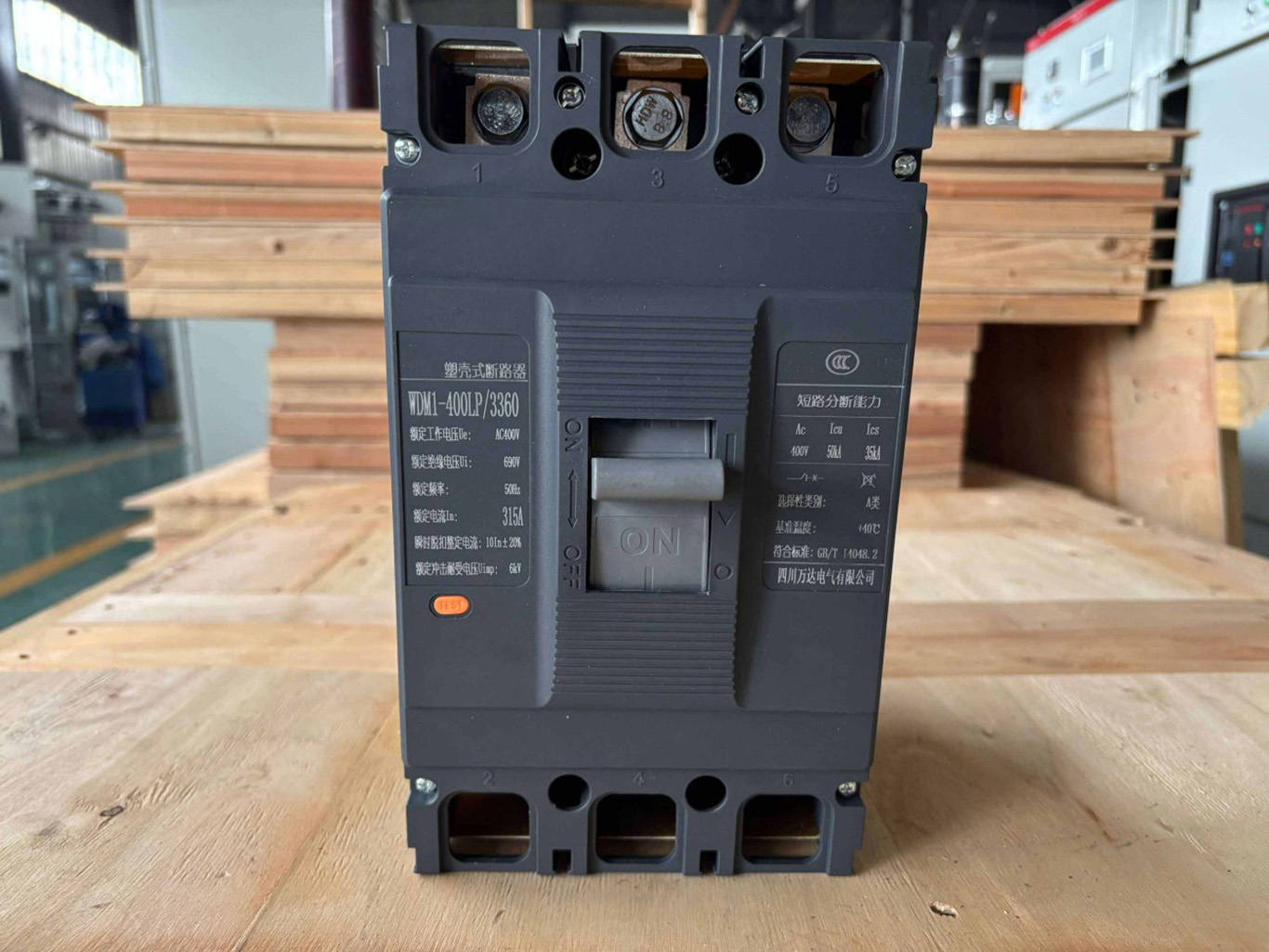

A molded case circuit breaker (MCCB) is a low-voltage circuit breaker featuring an outer casing constructed from high-strength, flame-retardant plastic. The internal conductive components, operating mechanisms, and protective devices are entirely enclosed within this plastic housing, ensuring both safety and durability.
Available in various frame sizes, these breakers correspond to different current ratings and breaking capacities, thereby meeting the operational requirements of a wide range of low-voltage applications. They represent a highly common type of protective device utilized within low-voltage switchgear and are often installed together with equipment such as busbar trunking systems to ensure efficient power distribution.
Within a low-voltage power distribution network, MCCBs primarily serve a protective function; they are designed to promptly interrupt the power supply in the event of an overload or short circuit, thereby preventing damage—such as burning—to the wiring and connected equipment. They are typically found in fixed-installation distribution equipment, such as power distribution cabinets and switchboards; furthermore, certain high-current models support a withdrawable installation configuration.
This type of circuit breaker also offers excellent scalability; when equipped with specialized overload protection modules, it can be utilized to protect electric motors—a configuration in which it is frequently referred to as a motor protection circuit breaker.