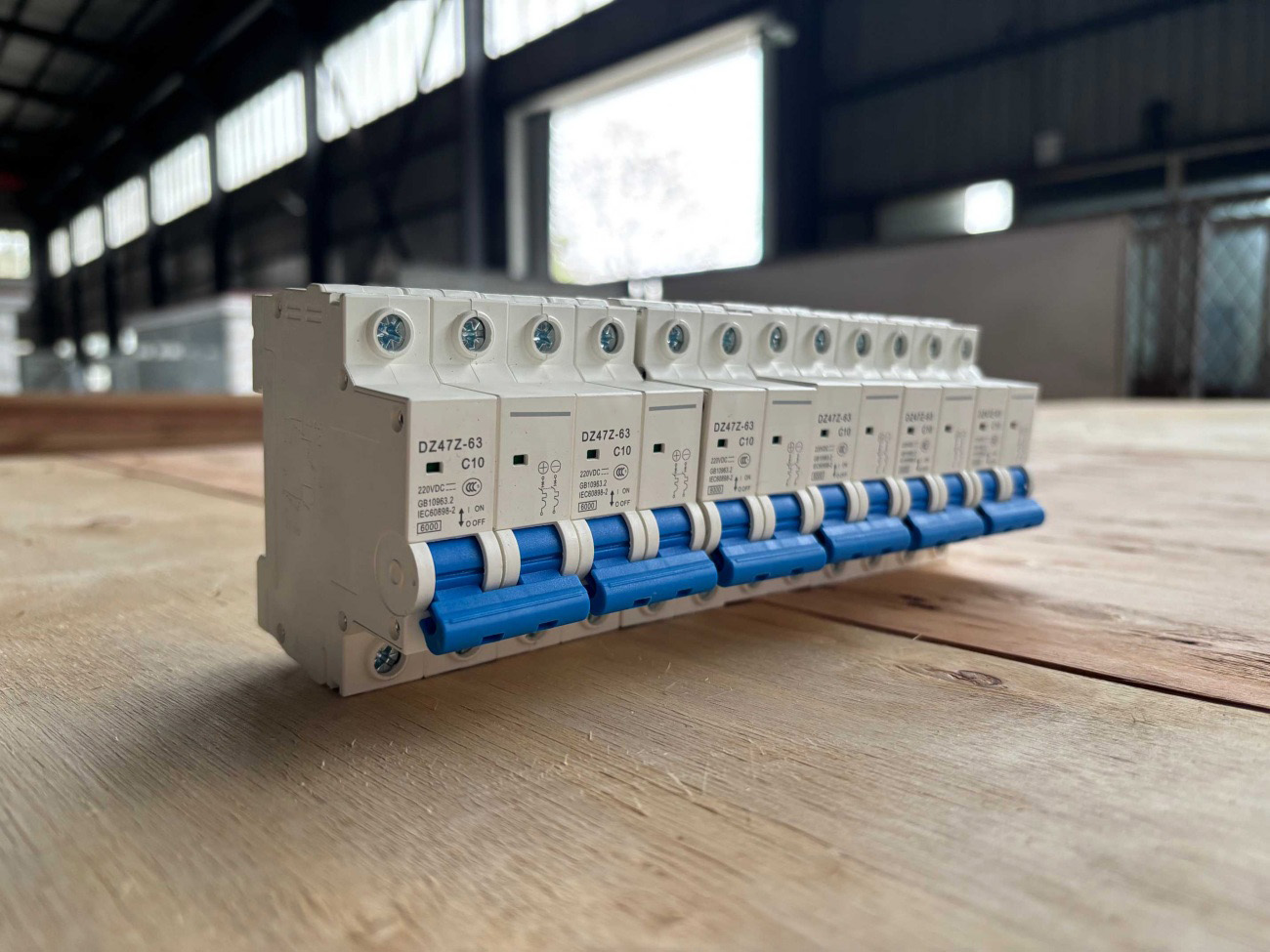

A miniature circuit breaker, which we often call an MCB, is a small, low-voltage protection switch installed in the final circuit.
It is mainly used in homes, distribution boxes, and small equipment. It is small in size and easy to install on a rail. It can automatically trip when the circuit has an overload or short circuit, protecting the wires and appliances from being burned. Its rated current is generally small, mostly used for lighting, sockets, and other end circuits. It is the most common basic protection device in the distribution system.
From the definition, it is essentially a combined switch of manual operation and automatic tripping: normally, it can turn on and off the circuit like a normal switch; once the current in the circuit goes over the set value, it will trip by itself. Different from the old fuses, after an MCB trips, you do not need to replace parts; just push the handle back, and it can be used again. Its shell is usually made of flame-retardant plastic, and inside it has contacts and a tripping mechanism. Its modular width allows it to be mounted side by side on a standard rail, making it easy to combine into multi-circuit systems in a distribution box.