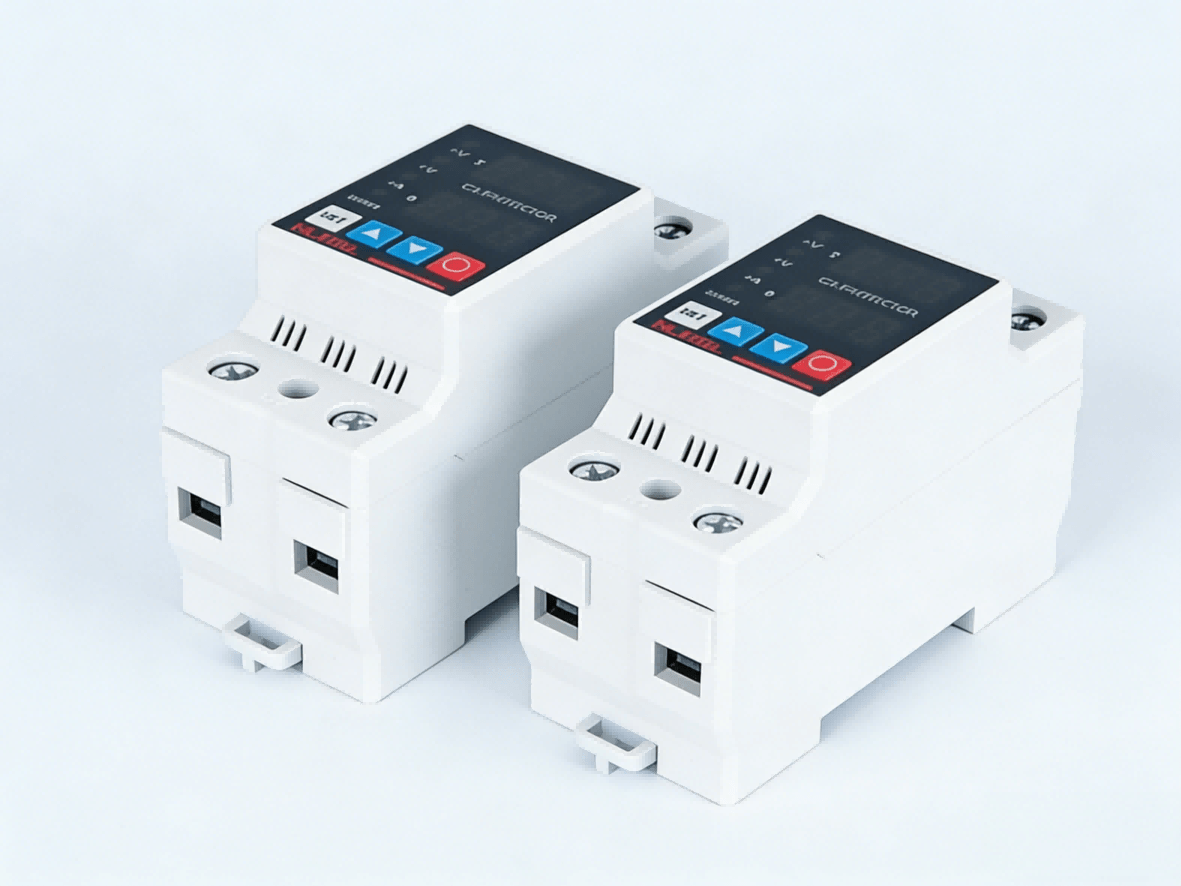

When selecting a voltage and current protector, there is no need to do complicated calculations. The core is to fit your project’s load and usage environment. It is recommended that you focus on the following 6 points to choose correctly and avoid pitfalls.
1. Load type
For resistive loads such as lighting and electric heaters, a basic model is sufficient, no need to spend extra money; for inductive loads such as motors and water pumps, the starting current is high, so you must choose a dedicated model with time delay and impact resistance, otherwise it may cause nuisance tripping and affect use; if multiple loads are mixed, choose a multi-functional comprehensive model with good adaptability.
2. Match rated current
For ordinary equipment, leave a margin of 10%-50% above the normal working current; for motors, leave more margin. The protector’s current should be slightly higher than the equipment’s operating current; do not choose too high, otherwise it will not provide protection and will be equivalent to installing nothing.
3. Voltage
For home use and small equipment, choose 220V single-phase; for factories and large equipment, choose 380V three-phase; if your grid voltage is unstable, often fluctuating high and low, choose a wide voltage range model, and be sure to confirm the overvoltage and undervoltage protection values in advance to avoid mismatch.
4. Protection functions
Basic overvoltage, undervoltage, overcurrent, and overload protection must be present; this is the bottom line. If the equipment is unattended or used in a factory, you can add time-delay start, fault memory, and alarm functions for greater peace of mind.
5. Reset mode
For unattended locations, choose automatic reset, which can restore power automatically after fault removal without requiring someone to operate it; for precision instruments, assembly lines, and other applications with high safety requirements, you must choose manual reset, which requires troubleshooting before restarting to prevent secondary faults.
6. Usage environment
If the installation location has high temperature, humidity, or a lot of dust, choose an industrial-grade model, which is durable; for outdoor installation, be sure to pay attention to waterproof and dustproof performance, check the IP rating; if the grid fluctuates greatly, still prioritize a wide voltage model for better stability.