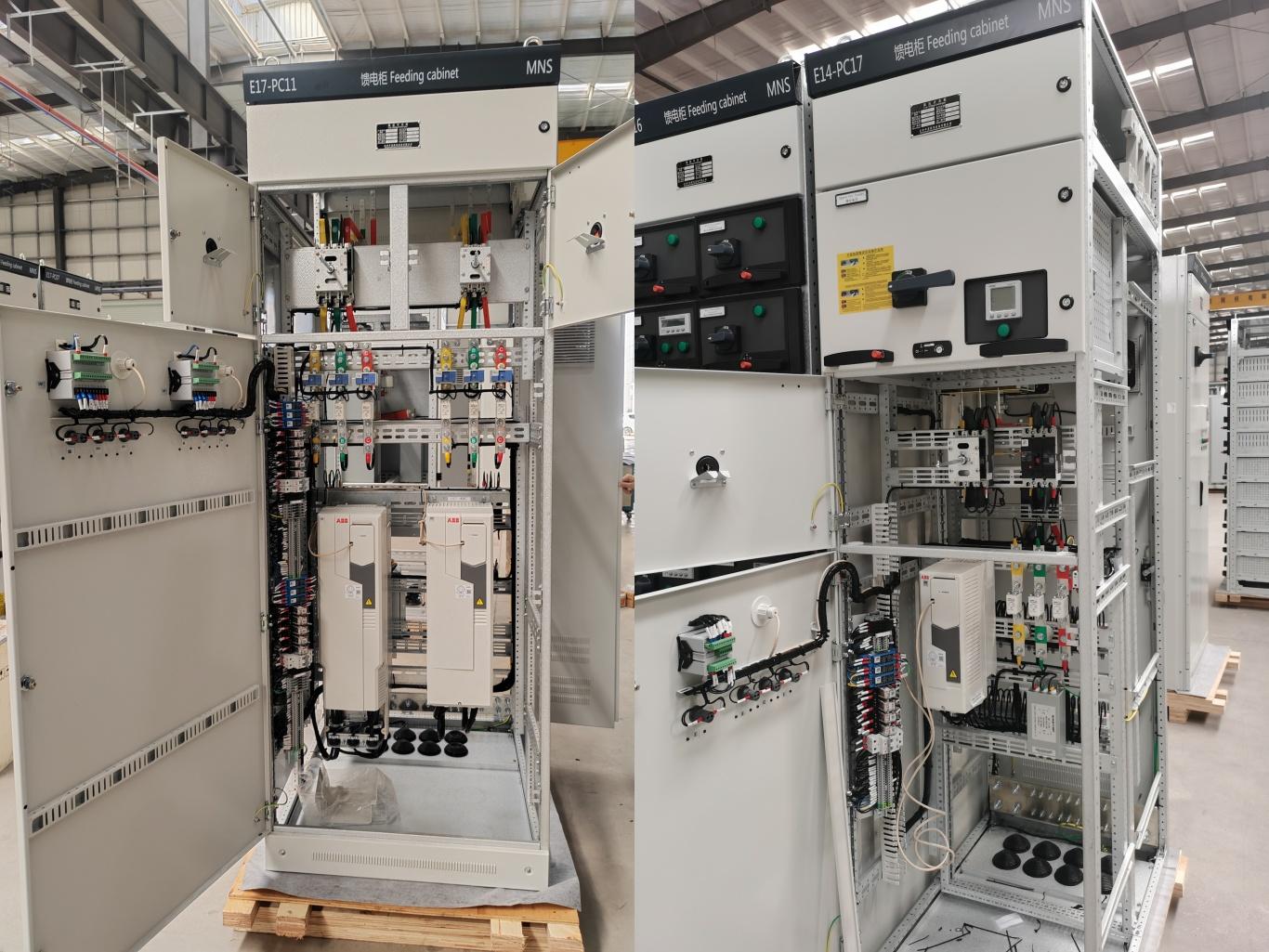

Choosing a suitable VFD control panel is not about getting tangled up in technical theories, but about matching the specifications with the actual application needs. The following factors deserve the most attention.
1. Motor power and load type
First, confirm the motor’s rated power, voltage, and current. At the same time, look at what load the motor is driving. It is recommended to choose a panel slightly larger than the motor’s rated capacity for more reliable operation.
2. Voltage and power supply compatibility
Confirm whether the VFD control panel is compatible with the site’s power supply, voltage level, short‑circuit capacity, etc.
3. Installation environment
Harsh environments require stronger protection and better cooling. Choosing a VFD control panel that suits the actual environment reduces failures and extends life. In some outdoor or temporary power supply projects, it may also be used in conjunction with a containerized substation to improve the overall system’s adaptability.
4. Safety protection functions
Overload, short circuit, overvoltage, undervoltage, overtemperature, phase loss protection, and emergency stop function are all basic configurations. The better the protection, the less downtime and the lower the maintenance cost.
5. Equipment maintenance and future expansion
A clear internal layout, space reserved for adding components, and the use of standardized parts all reduce long‑term operating costs.