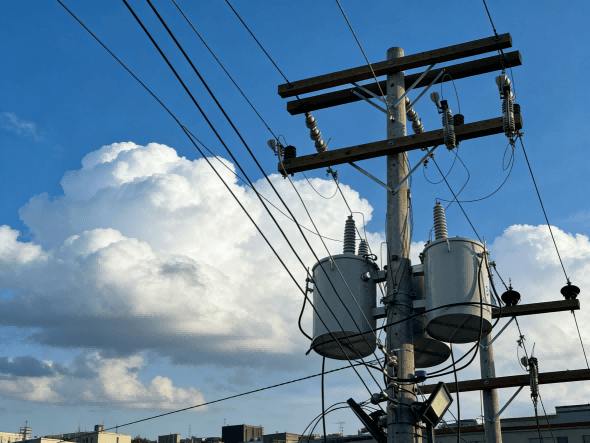

Choosing the right distribution transformer allows you to adjust the voltage to an appropriate level, ensuring that all connected equipment operates stably. However, when making a purchase, many people are not quite sure what factors to consider. Rather than focusing solely on price or size, it is more important to first clarify the actual requirements of the project.
1. Load demand of the project
Before deciding on the size of the distribution transformer, the total power consumption of the entire system should be estimated, including all connected equipment, machinery, lighting systems, and other electrical loads. If the transformer is undersized and cannot handle these loads, the equipment may overheat, and performance may suffer. On the other hand, if it is oversized far beyond actual needs, it will result in unnecessary waste.
2. Input voltage and output voltage
Grid power is generally supplied at high voltage and must be stepped down for safe use. Therefore, the distribution transformer must match both the existing supply voltage and the rated voltage of the equipment. If the voltage levels do not correspond, the equipment may fail to operate properly or could even be damaged.
3. Installation location and surrounding environment
Depending on the project layout, the distribution transformer can be installed indoors or outdoors. Indoor environments are relatively controllable, while outdoor transformers must contend with dust, humidity, high temperatures, rain, and other environmental factors. In industrial settings, additional protective measures may be required to deal with vibration or temperature fluctuations.
4. Future expansion needs
Many projects have low initial power consumption, but later on, with the addition of new equipment or system upgrades, power demand may increase. If expansion is likely in the future, it is advisable to choose a distribution transformer with some margin.
5. Ease of operation and maintenance
A distribution transformer is a long‑term piece of equipment; regular inspection and maintenance are essential. Choosing a transformer that is convenient and safe to operate and maintain makes routine upkeep much simpler and shortens downtime if repairs are needed.