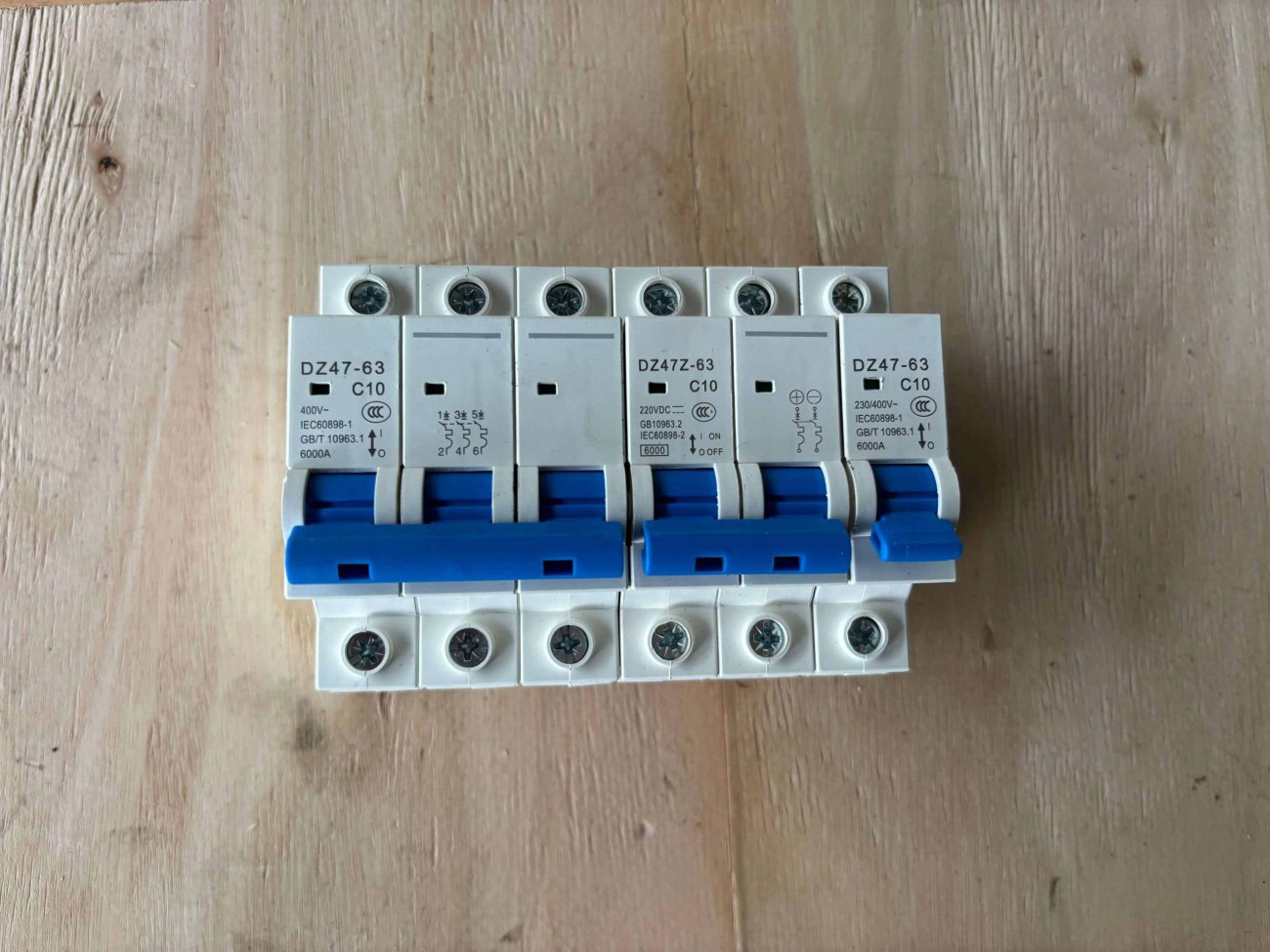

When selecting a miniature circuit breaker (MCB), one must not rely solely on a single parameter; instead, a comprehensive assessment based on the specific load conditions and application environment is required. Only by properly aligning the rated current, tripping curve, breaking capacity, number of poles, and relevant certifications can one ensure more reliable protection and safer, more stable electrical operation.
1. Determine the Load Current
First, accurately calculate or measure the operating current based on the power, voltage, and other parameters of the load equipment. Then, select a matching circuit breaker with a rated current to ensure accurate and reliable protection.
2. Select Rated Current
Select a circuit breaker with a rated current slightly higher than the load current.
3. Choose Tripping Type
Select the tripping curve based on load characteristics:
B-type: lighting/household
C-type: commercial/general industrial
D-type: motors/transformers
4. Check Breaking Capacity
Ensure the circuit breaker’s breaking capacity is greater than the maximum short-circuit current that may occur in the power distribution system.
5. Select Number of Poles
Select the appropriate number of poles based on the circuit type.
6. Verify Standards and Certifications
Confirm that the circuit breaker meets safety standards and certification requirements.
7. Confirm Environmental Suitability
Check the suitability of the ambient temperature, humidity, and installation location.
8. Final Review & Installation
Recheck all parameters before installation. Wiring and installation must be performed correctly according to the manufacturer’s instructions.