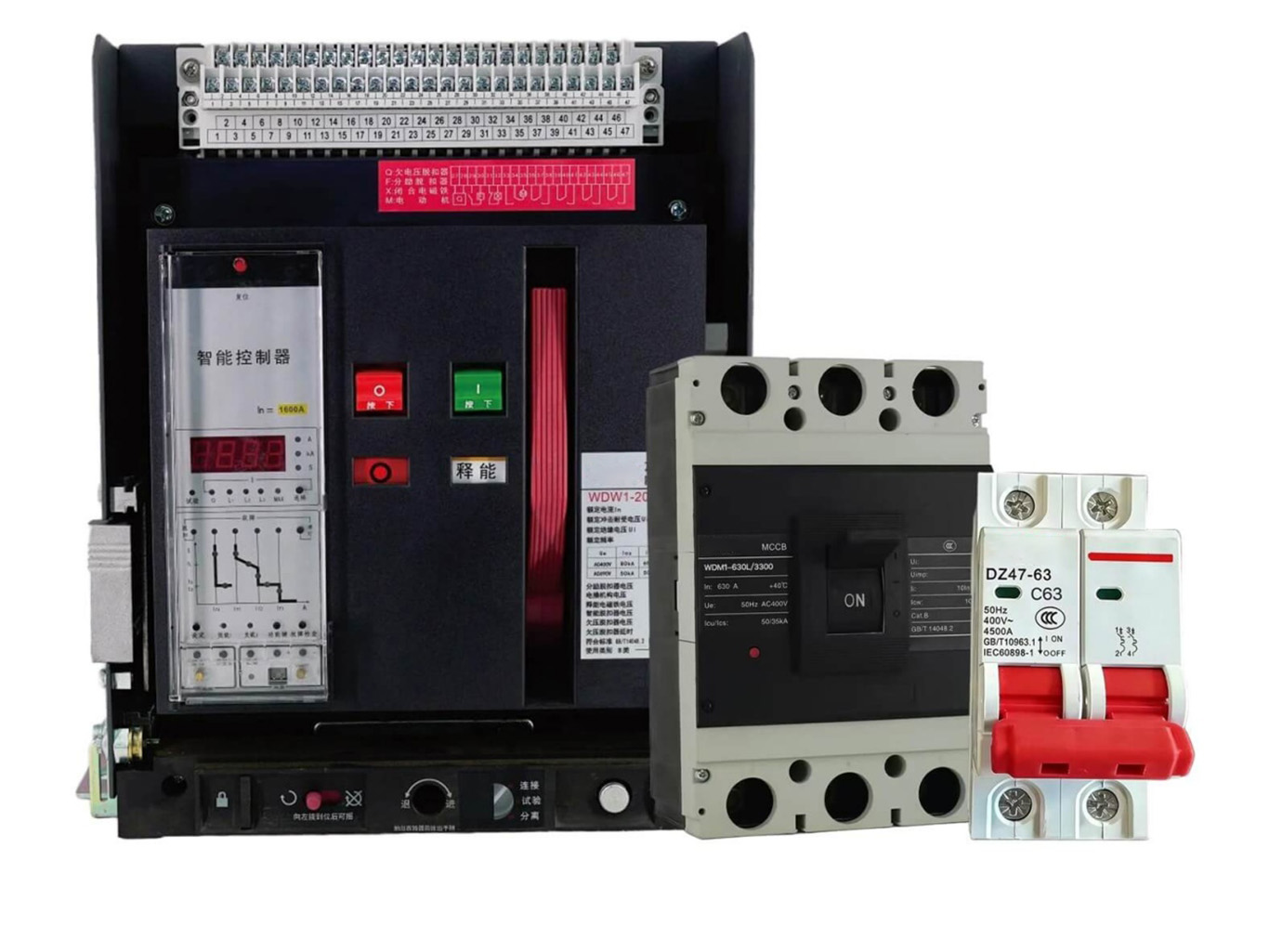

Choosing the right circuit breaker is an important step in building a safe and reliable electrical system. If you choose incorrectly, it can lead to frequent tripping, equipment damage, or even safety hazards. To make the right choice, it is essential to understand how the electrical system is used and under what conditions it operates.
1. System current requirements
Understand the expected current level to ensure the circuit breaker matches the actual operational demand. Each electrical system carries a certain amount of current, depending on the number and power consumption of connected devices. If the circuit breaker is undersized, it may trip frequently even under normal operation. If it is oversized, it may fail to cut off the current in time when a fault occurs, thereby reducing the protection effectiveness for the distribution transformer and other critical equipment.
2. System voltage
The circuit breaker must match the system voltage to ensure safe operation and reliable performance. Electrical systems operate at different voltages depending on their application (e.g., residential, commercial, or industrial). If the voltage rating is incorrect, the protection effectiveness will be compromised, and equipment may even be damaged.
3. Type of load
Understanding the operating characteristics of connected equipment helps prevent such troubles and improve system stability. Loads such as lighting have stable and predictable power demands. However, for loads like VFD control panels or heavy machinery, they may draw a much larger current during startup. If this sudden current surge is not taken into account when selecting a circuit breaker, unnecessary tripping can easily occur.
4. Installation environment
The installation environment has a significant impact on circuit breaker selection. High temperatures can cause thermal trip units to operate more easily; it is recommended to select a circuit breaker with a higher current rating or one with temperature compensation. Damp environments can lead to reduced insulation performance and metal corrosion; moisture‑resistant circuit breakers or those with residual current protection should be chosen. Dusty or polluted environments affect contact and heat dissipation; using distribution boxes with high dust protection or industrial‑grade circuit breakers is advisable. At high altitudes (above 2000 meters), insulation and arc‑extinguishing capability are reduced, so derating or selecting circuit breakers specifically designed for high‑altitude use is necessary. In environments with vibration, mechanical wear, and contact loosening are more likely; industrial‑grade or vibration‑resistant circuit breakers can be selected, and mounting should be secured using rails or bolts.
5. Collaborate with experienced professionals or suppliers
Experienced professionals or suppliers can help review system requirements and confirm whether the selected circuit breaker is truly suitable for your application.