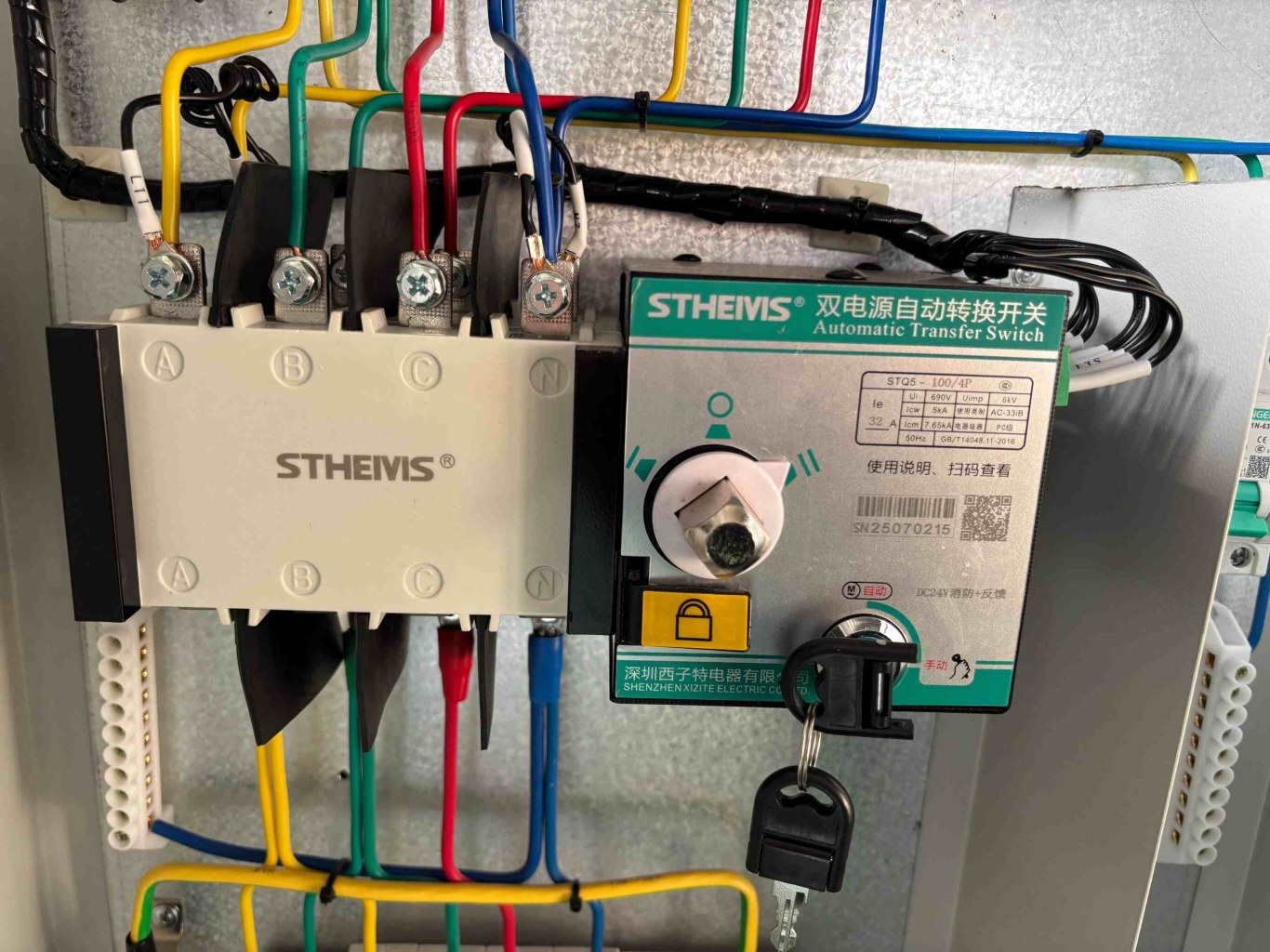

The core function of an ATS is to automatically switch the power supply from the main source to a backup source when the main power fails, and then switch back to the main power once it is restored. The typical working process of an ATS is as follows:
1. Normal Condition
When the main power supply (usually utility power) is operating normally, the intelligent controller detects that the power is stable. The main power switch remains closed and continuously supplies electricity to the load.
2. Fault Detection
The controller continuously monitors parameters such as voltage and frequency of the main power supply. Once an abnormal condition or failure is detected, the system immediately enters the transfer process.
3. Delay Confirmation
To prevent false switching caused by temporary fluctuations, the system applies an adjustable short delay (typically 0–6 seconds, with 1 second being the most common) to confirm that the fault is real.
4. Backup Power Source Start
If the backup power source is a generator, the controller sends a start signal. After the generator successfully starts and its voltage and frequency reach the rated values, the backup power switch is ready to close.
5. Power Transfer
The main power switch opens first, and then the backup power switch closes. This sequence ensures that the two power sources are never connected simultaneously, allowing the load to be safely transferred to the backup power supply.
6. Power Restoration
Once the main power supply returns to normal and remains stable after an adjustable long delay (usually 0–30 minutes), the system automatically transfers the load back from the backup power source to the main supply. The generator then runs for a short no-load cooling period before shutting down.
This entire automatic switching process typically takes only a few seconds—or even less—minimizing the impact of power outages so effectively that users may not even notice any interruption in power supply.