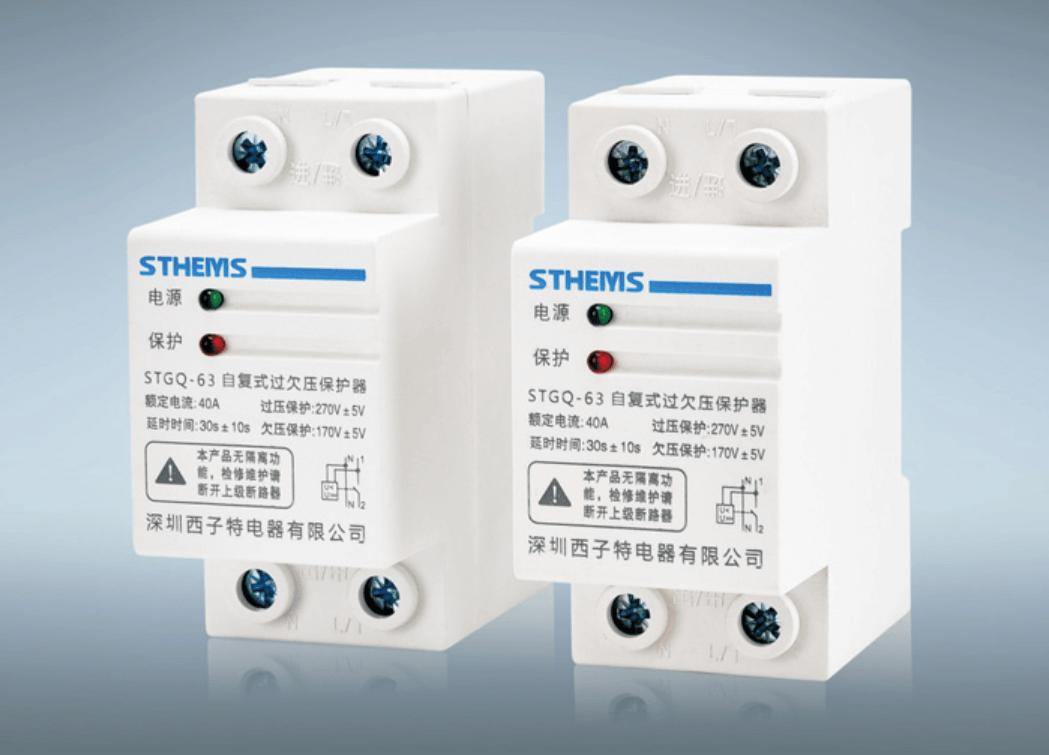

During electrical operation, issues such as voltage instability and current overload are quite common; these can easily burn out appliances, damage equipment, or even pose significant electrical safety hazards. Voltage and current protection devices are specifically designed to mitigate these risks. But how exactly do they work? Let’s take a closer look.
1. Real-time Monitoring
The device continuously monitors the operational status of the connected power supply, focusing specifically on two key parameters: voltage and current.
It identifies voltage anomalies—including overvoltage (voltage too high) and undervoltage (voltage too low)—in real time. Simultaneously, it detects current-related issues, such as excessive current levels or load overloads.
Furthermore, utilizing internal sensing circuitry, the device converts these medium-voltage electrical signals into low-voltage signals, facilitating subsequent recognition and processing by the internal control circuits.
2. Signal Analysis and Fault Determination
The device’s core control chip compares the real-time voltage and current data it has collected against a set of pre-configured protection thresholds.
If the voltage exceeds the safe upper limit, it is classified as an overvoltage fault; if the voltage drops below the safe lower limit, it is classified as an undervoltage fault; and if the current exceeds the rated standard, it is classified as an overcurrent or overload fault.
3. Rapid Protection Response
As soon as any anomaly or fault is detected in the power supply, the device’s control system responds immediately by issuing a rapid power-cutoff command.
It directly disengages its internal relay, thereby severing the power supply to the downstream load equipment. By cutting off the power in the shortest possible time, the device prevents abnormal currents or voltages from burning out connected appliances and minimizes the losses associated with such faults.
4. Power Restoration Following a Fault
Once the fault has cleared and the circuit has stabilized, the device offers two restoration modes to suit different operational scenarios:
Automatic Restoration: Power supply is automatically restored once circuit stability is confirmed, requiring no manual intervention; this mode is suitable for general daily power usage scenarios.
Manual Restoration: Requires a manual reset to re-energize the circuit; this prevents frequent start-stop cycling of equipment and is typically utilized for high-power, precision, or high-value devices.