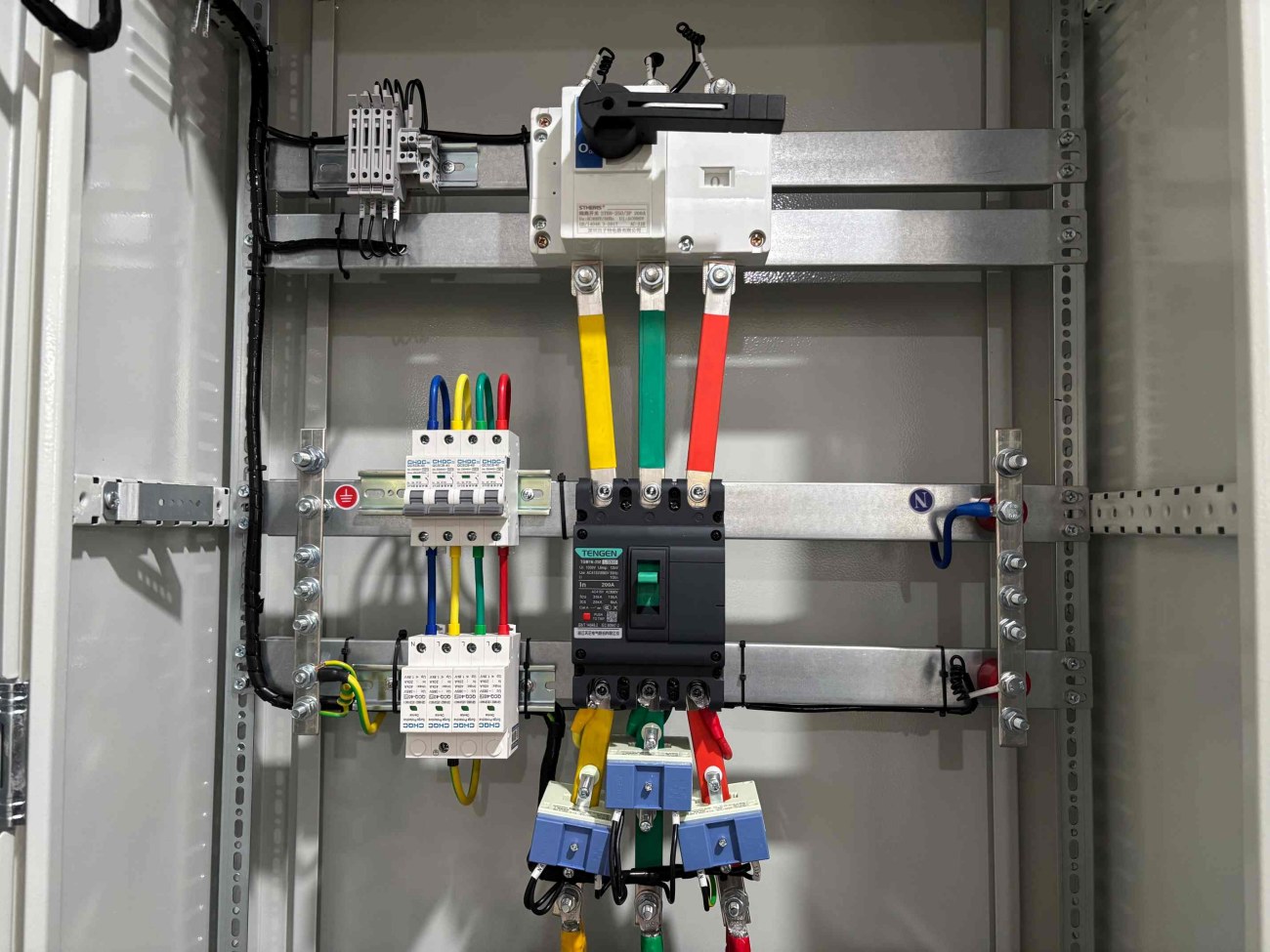

Understand the working principle of the power distribution cabinet, including how it distributes, controls, and protects electricity for safe and reliable system operation.
The core of the working principle of the power distribution cabinet is to distribute electricity to each circuit in an orderly manner, making power transmission both safe and efficient.
When electricity enters from the upstream power source, it typically first passes through a transformer or upstream distribution equipment, then flows through the incoming line into the distribution cabinet. The current travels along the internal conductors and busbar system, forming the main power transmission path. Next, according to the system design, the electrical energy is distributed to multiple outgoing circuits, each responsible for supplying power to specific equipment, machinery, or areas. Operators can independently manage each circuit via the control devices inside the cabinet, making maintenance or adjustments much more convenient.
During this process, the protection components continuously monitor the electrical conditions inside the cabinet. Once an abnormality such as overload or short circuit occurs, the system immediately isolates the problematic circuit, preventing equipment damage and ensuring the stable operation of the entire power distribution system.