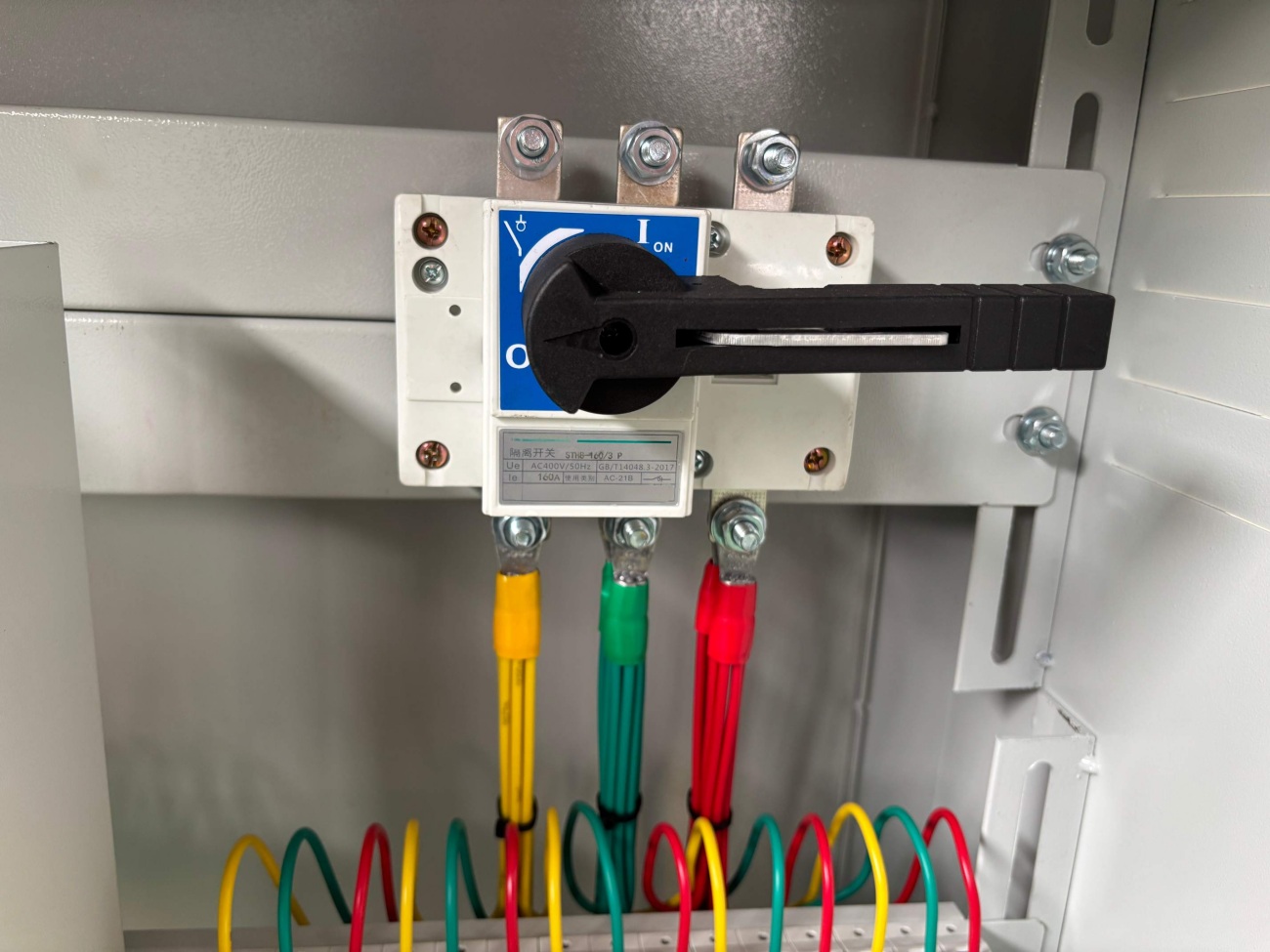

The working principle of the lighting control panel is to receive control signals, distribute electricity to each lighting circuit, and then turn lights on or off according to preset logic.
During normal operation, power enters the lighting control panel from the main distribution box and is then split into multiple branch circuits, each corresponding to a lighting area, such as hallways, offices, workshops, or outdoor areas.
The lighting control panel responds to manual or automatic control commands. Manual means pressing buttons or flipping switches, allowing operators to turn lights on or off at any time; automatic comes from timers, scheduling systems, or external control signals, executing automatically according to set times. After receiving a command, the internal switching devices connect or disconnect the corresponding circuit.
The lighting control panel also performs grouping and sequencing operations on the lighting groups. Starting different groups in sequence according to a preset order avoids instantaneous current surges and makes system operation smoother.
During operation, the lighting control panel continuously maintains the connection between the power source and the luminaires and adjusts at any time as commands change. If one circuit is turned off, other circuits are completely unaffected. This allows multiple lighting areas to operate independently while being centrally managed from the same place.