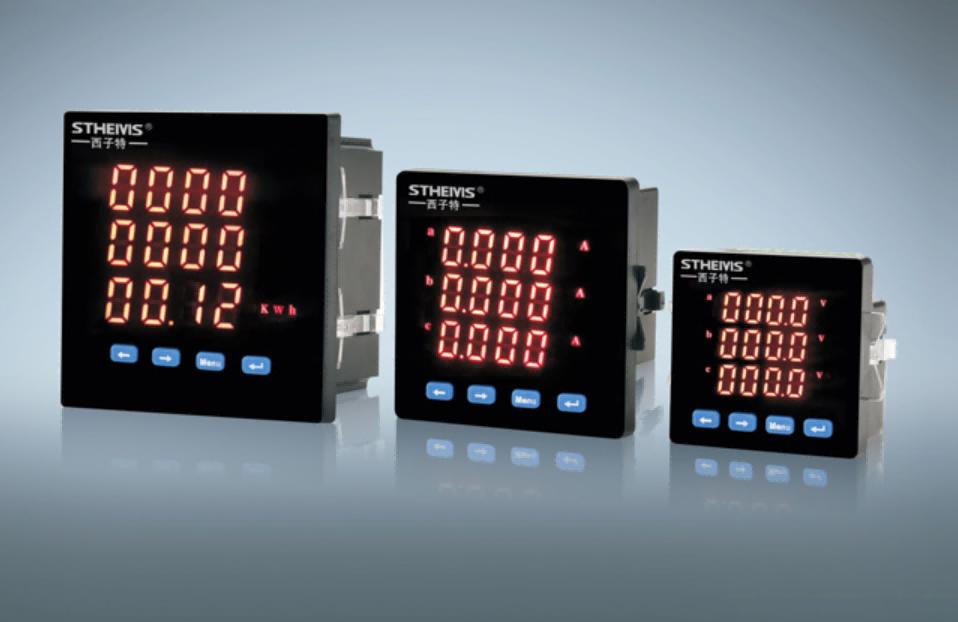

The working principle of the multifunction meter is very simple, mainly three steps: collecting circuit signals, calculating and processing data, and displaying and transmitting data. Relying on its own hardware and internal program coordination, it enables real-time monitoring of electrical parameters in modern power distribution systems.
1. Signal acquisition
When the multifunction meter works, it first completes the collection of basic signals. Using its own voltage terminals, it directly obtains the voltage signal in the circuit and cooperates with the current transformer to inductively collect the circuit current. The actual distribution circuit has high voltage and large current, which cannot be directly read by the instrument. Relying on this acquisition method, high voltage and strong current can be converted into safe and weak current signals, allowing the internal components of the instrument to recognize and receive normally, laying the foundation for subsequent calculations.
2. Data processing
After signal acquisition is completed, the internal core chip of the device continuously and quickly collects real-time voltage and current data. Relying on the basic power calculation logic, the power calculation formula is used for precise calculation. Various key power parameters are calculated through the calculation, including active power, reactive power, apparent power, and other real-time operation data. At the same time, the power consumption is continuously accumulated and calculated, and the long-term power consumption of the circuit is completely recorded, fully covering the data required for daily monitoring of power distribution.
3. Display and output
All calculated power parameters are directly displayed on the instrument screen, making it convenient for on-site personnel to check the circuit operation status at any time. In addition, the instrument supports communication connections. With the help of the RS485 interface and Modbus communication protocol, all monitoring data can be uploaded remotely, connected to the entire power monitoring system, achieving centralized management and remote viewing, meeting the intelligent power distribution monitoring needs of cabinets and factory areas.