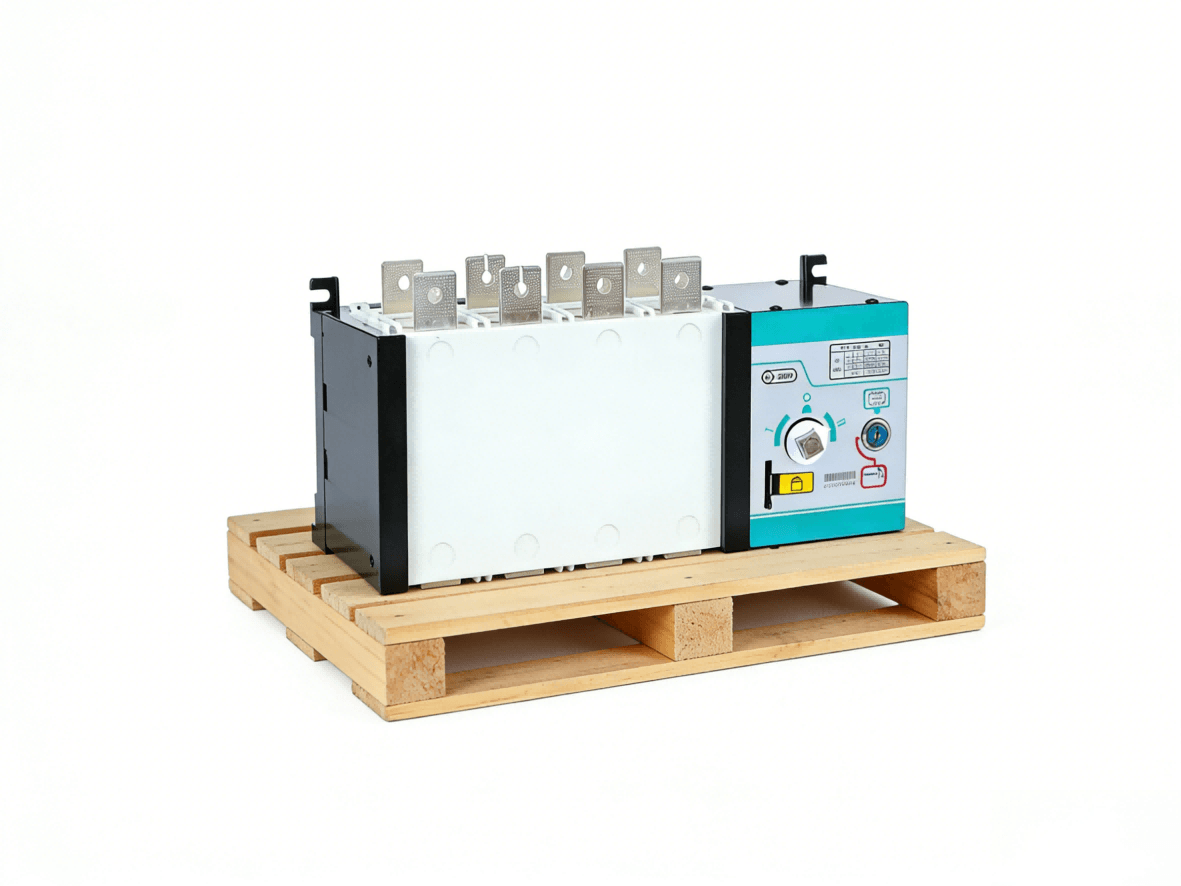

Let’s walk through a few key technical parameters that come into play when selecting an ATS—these directly affect whether the equipment can match up with the system and whether the transfer goes smoothly.
1. Voltage Rating
The rated voltage of the ATS needs to match the grid voltage. Common setups include low-voltage (220/380V) and high-voltage (10kV and above) systems. When selecting, you need to consider both the voltage your load uses and whether the backup power supply matches it. If the voltages don’t line up, the switch may not operate properly, and you could end up with arcing during transfer or even equipment damage.
2. Current Rating
The rated current is the maximum load current the ATS can handle. When selecting, we need to settle on an appropriate value based on the load’s peak current and continuous current. Pick too low a rated current, and the switch is prone to overload and overheating; pick too high, and costs go up, with operating losses potentially increasing as well.
3. Load Type Compatibility
Different loads have quite different requirements for the ATS. For resistive loads like lighting and electric heating, transfer is relatively forgiving. But for inductive loads like motors and transformers, the instantaneous inrush current during transfer means you need an ATS with strong short-time withstand capability. For capacitive loads like capacitor compensation devices, they’re sensitive to voltage fluctuations during transfer, so the ATS’s response speed and control strategy need to be designed accordingly.
4. Transfer Capability and Speed
Transfer capability and speed determine whether the load can switch smoothly to the backup source when power is lost. Static ATS uses semiconductor devices, offering fast transfer speeds—suitable for scenarios with especially high demands for power continuity. Mechanical ATS relies on mechanical contacts for transfer, offering good durability but somewhat slower response times. For critical equipment, even a slight transfer delay can cause data loss or system shutdown, so transfer speed is something we need to pay close attention to.
5. Environmental Requirements
The installation environment directly determines what ingress protection rating and durability the ATS needs. For indoor installation, IP20–IP30 is generally sufficient, but for outdoor or humid environments, you’ll need a model rated IP54 or higher with a corrosion-resistant design. Temperature, humidity, dust—these factors all affect the ATS’s lifespan and reliability. Choosing according to the actual environment helps bring down both failure rates and maintenance costs.