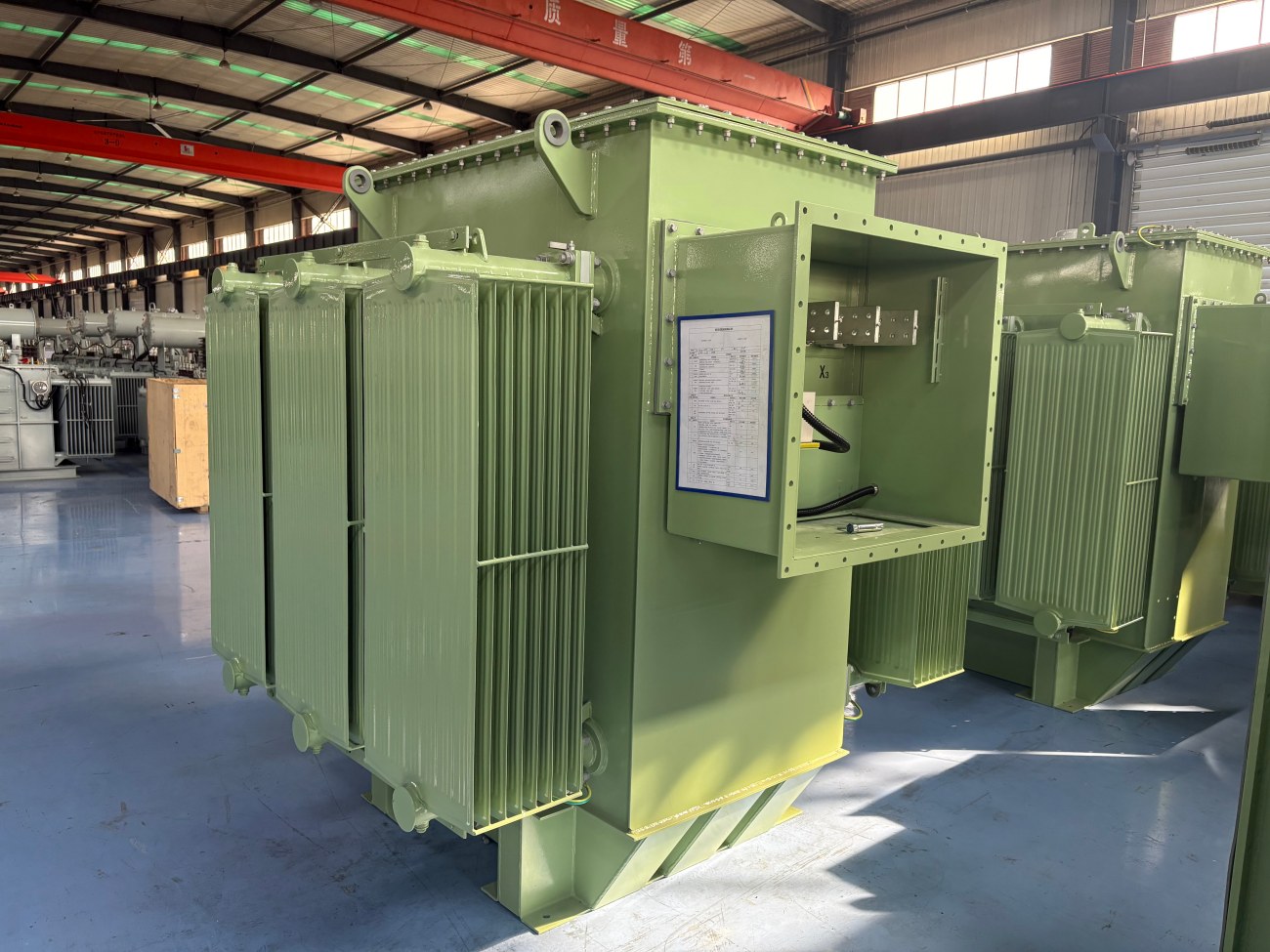

A distribution transformer is a piece of electrical equipment that transmits power from the power grid to end users. It is responsible for converting the electrical energy from the grid into voltage levels that can be safely used by homes, buildings, and industrial facilities. Simply put, it steps down high voltage to low voltage that everyday equipment can use. Without it, the electricity delivered to most buildings would be at too high a voltage to be used properly or safely.
When electricity is transmitted over long distances, high voltage is generally used to reduce losses and improve efficiency. However, this high voltage cannot be used directly for lighting, air conditioning, office equipment, or industrial machinery. That’s where the distribution transformer comes in. It serves as the final link in power delivery, stepping the voltage down to a safe range before it enters a building to supply power to various equipment. You can think of it as a bridge between the large power grid and everyday electricity use.
Another important role of the distribution transformer is to maintain stable system operation. When the voltage is appropriate, equipment runs smoothly and efficiently. If the voltage is too high, it can easily damage electrical appliances and shorten their lifespan. If the voltage is too low, equipment may fail to start properly or operate with reduced efficiency. The distribution transformer keeps the voltage within a suitable range, ensuring the system functions properly.