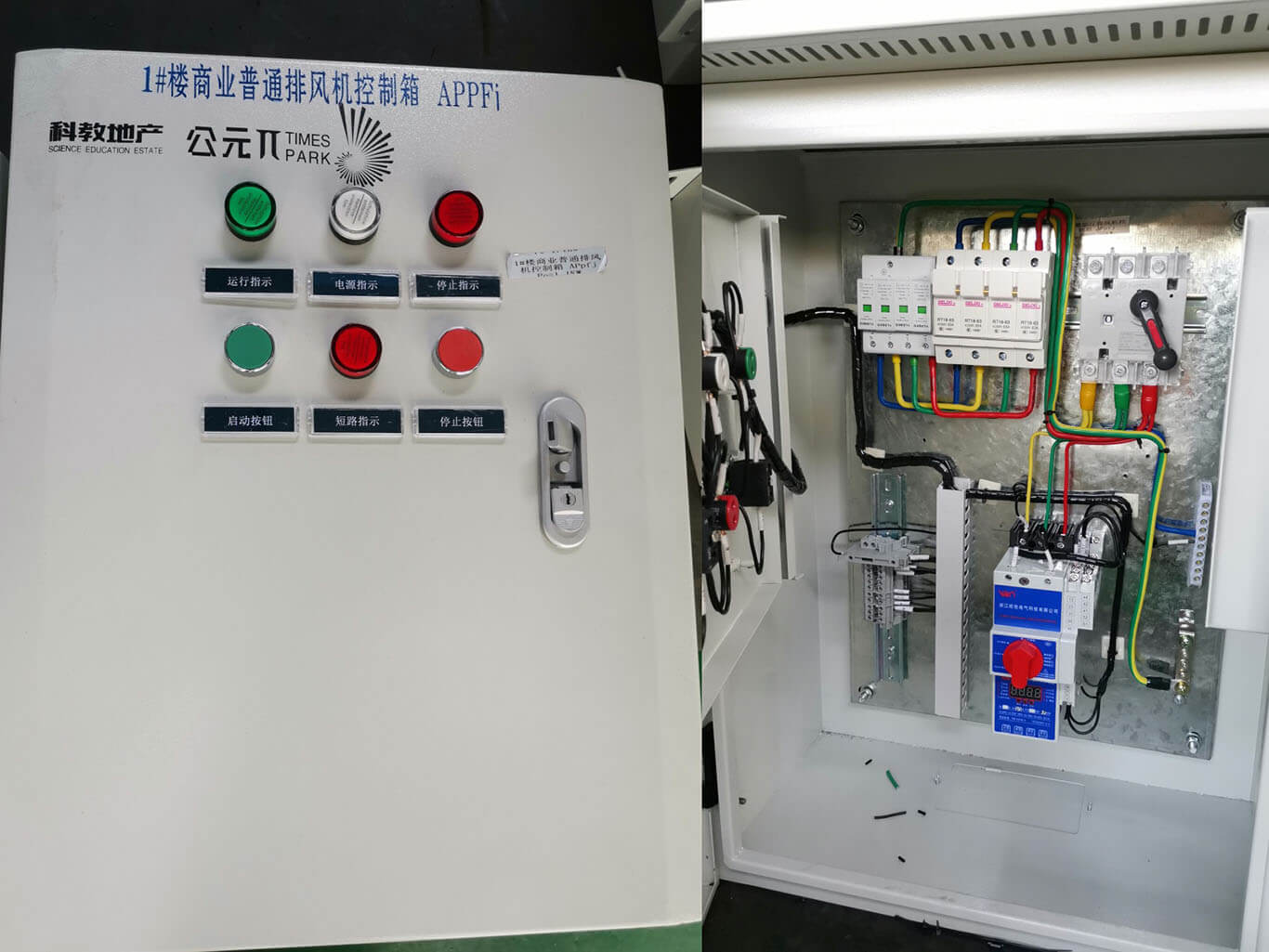

The power distribution box receives, distributes, controls, and protects electricity, ensuring a safe and stable power supply to different circuits.
First, electricity enters the power distribution box from the main power source via the incoming cable. The electricity flows through the internal conductors and is distributed to multiple branch circuits according to the system design.
During the distribution process, the electric power passes through protection and switching elements such as circuit breakers and is distributed to different output circuits. When necessary, it can also be combined with low-voltage switchgear or busbar trunking systems to achieve more efficient power distribution expansion.
Each branch circuit supplies power to a specific load, such as lighting, sockets, or industrial equipment. At the same time, switching devices allows each circuit to be connected or disconnected as needed.
If an abnormal condition occurs, such as excessive current or a circuit fault, the protection devices inside the power distribution box automatically disconnect the affected circuit. This helps protect equipment and maintain the safe operation of the power system.
In summary, the working principle of the power distribution box is to direct electricity from a single input power source to multiple controlled and protected output circuits.
Let me know if you need any adjustments.