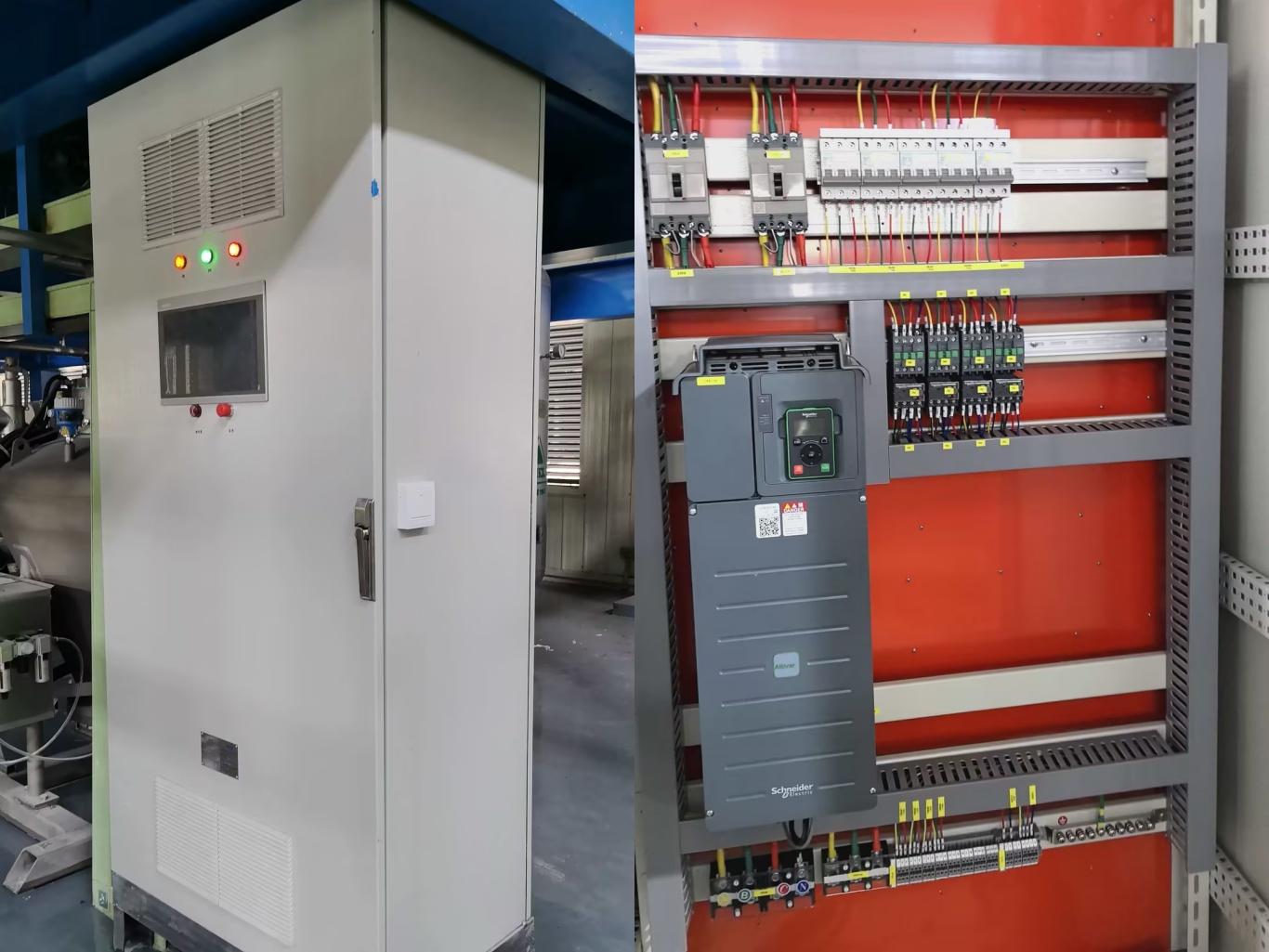

The Working principle of the VFD control panel explains how it adjusts motor speed and voltage for efficient and stable operation across industries. The working principle of the VFD control panel is to convert fixed‑frequency AC power into AC power with adjustable voltage and frequency, thereby controlling the motor’s speed and torque.
The whole process is divided into three steps:
1. Rectification
The standard AC power coming from the power source first passes through the rectifier module and is converted into DC power, turning the fluctuating AC into a stable unidirectional current.
2. Filtering and stabilization
The DC power enters the DC bus section, where components such as capacitors filter out the ripple in the voltage, resulting in a smooth DC voltage.
3. Inversion adjustment
The stable DC power then passes through the inverter and is converted back to AC power. But this time, the output AC power has adjustable voltage and frequency as needed. The most critical part here is frequency adjustment: when the frequency is low, the motor speed is slow; when the frequency is high, the motor rotates fast. At the same time, the voltage is adjusted accordingly to ensure the motor’s magnetic field remains stable.