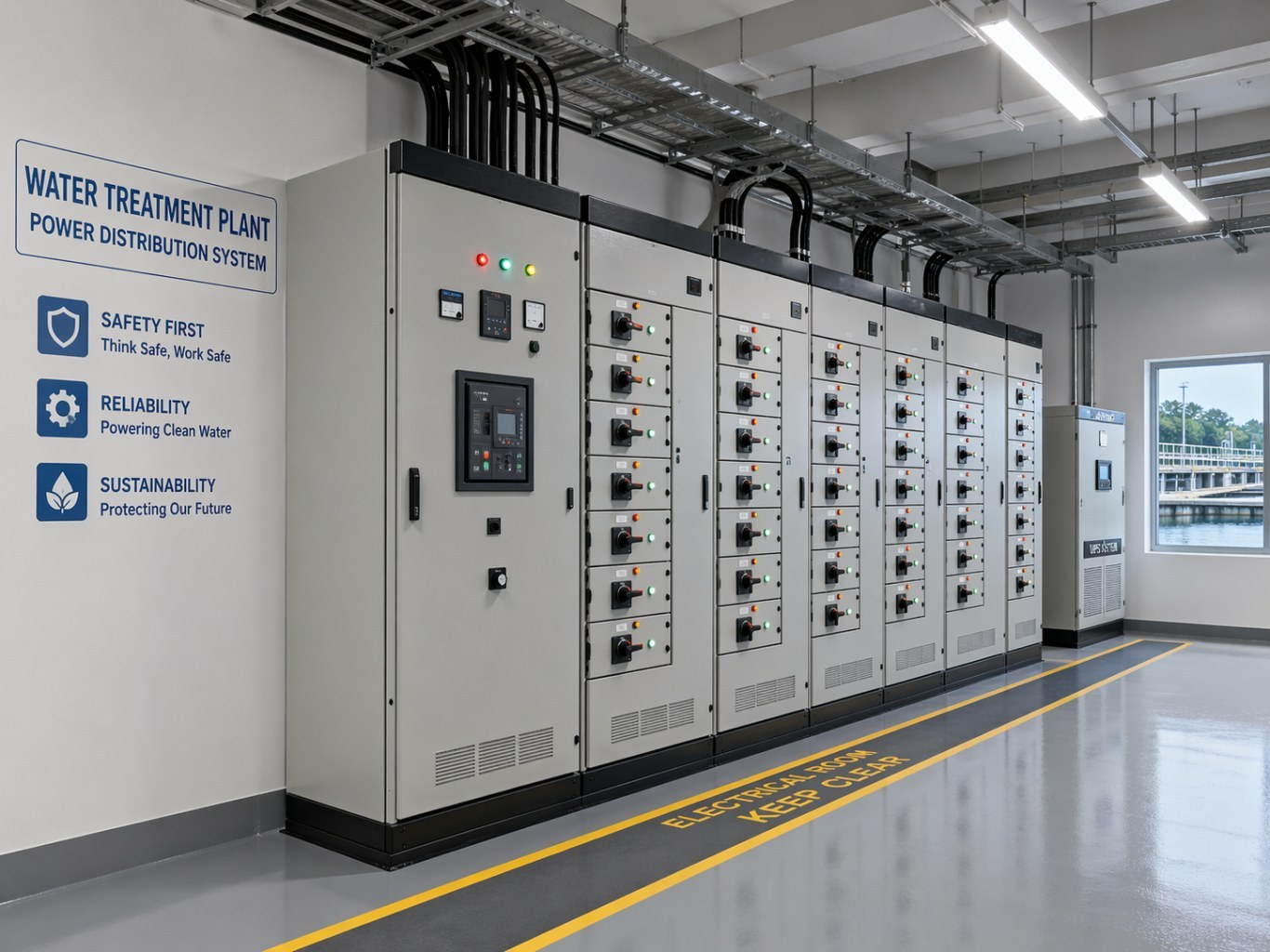

For a wastewater treatment to achieve a continuous and stable power supply, every step — from water intake, to biological treatment, and finally to discharge that meets standards — is inseparable from the electrical support provided by the power distribution systems. There are several key types of electrical equipment in the plant, each performing its own role to ensure the entire process runs smoothly.
1. Transformers
In a wastewater treatment, the transformer is responsible for stepping down the high voltage delivered from the external grid to the low voltage that the plant’s equipment can use. Equipment such as pumps and aeration systems all require a stable and safe voltage. With a suitable transformer, even during peak electricity demand, the equipment can operate normally without faltering.
2. Switchgear
This can be understood as a “power master control console”. It is responsible for distributing and isolating circuits in different areas. The advantage is that when equipment in a certain area needs maintenance or has a minor fault, only that circuit needs to be disconnected, without shutting down the entire plant. For example, if the influent pump station or the biological tank needs maintenance, the operator can isolate that part alone — it is both safe and convenient.
3. Power Distribution Panels
It acts like a large power strip, distributing electricity to each treatment step: filtration, sludge treatment, disinfection … each step has its own circuit. The benefit of this design is that each part works independently without interfering with others. If a problem occurs in one step, the other parts can continue to operate normally, keeping losses and impacts to a minimum.
As reliable power distribution systems become increasingly important in wastewater treatment operations, Wondon provides you with reliable transformers, switchgear, and distribution panels to support the stable and continuous operation of the plant.